Corporate AI Training
AI Training for Companies in Ghana
Isaac Kofi Maafo delivers AI training for companies in Ghana through DigiTransact AI, where he is Managing Partner and CEO. He has trained more than 2,000 professionals across Africa, and holds AI certifications from Stanford University, the University of Pennsylvania, Lund University and Vanderbilt University.
Most corporate AI training fails for the same reason: it teaches tools instead of judgement. Teams leave able to write a prompt, but no better at deciding where AI belongs in their work — or where it does not. These programmes are built the other way round, around the decisions your people actually make, the data they actually hold, and the regulatory and cultural context they actually operate in.
Discuss a training programme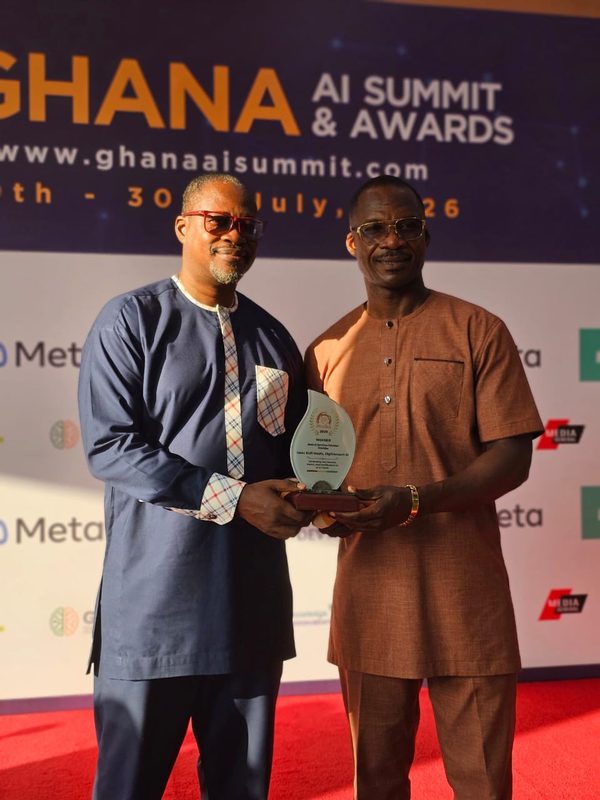
2,000+
Professionals trained across Africa
33
Years in ICT and technology leadership
10+
AI certifications from global universities
100+
AI systems built and deployed
Who these programmes are built for
- Executive teams and boards who must set AI policy before they can approve AI spend
- Banks, insurers and regulated firms where governance and auditability come before speed
- Operations, finance and customer-service teams who will use AI daily and need practical fluency
- Public sector institutions and development organisations building internal AI capability
- Technology teams who can build, but need a shared framework for what is worth building
What the training covers
Executive AI literacy
A working understanding of what current AI systems can and cannot do, framed around investment decisions rather than technology. Leaders leave able to challenge a vendor, read a proposal critically, and set a defensible AI position for the organisation.
Applied workflow training
Hands-on sessions built on your team’s real documents, processes and tasks — not generic exercises. Participants finish with working prompts, templates and workflows they use the following week.
Responsible AI and governance
Data protection, model risk, bias, human oversight and disclosure, taught against the realities of operating in Ghana and across African markets rather than as an abstract compliance module.
AI for regulated and data-sensitive work
Where customer data, legal exposure or regulatory reporting is involved, sessions cover what may be sent to a model, what must stay internal, and how to document the decision.
Train-the-trainer and internal capability
For organisations that want AI capability to compound rather than depend on external delivery, programmes can be structured to leave an internal cohort able to run the training themselves.
Post-programme reinforcement
Training that ends on the last day does not change behaviour. Programmes can include follow-up clinics and a review session to work through what teams hit once they applied the material.
The record, with sources
Every item below names the awarding or publishing body and the date, so it can be checked independently rather than taken on assertion.
More than 2,000 professionals trained in artificial intelligence across Africa.
Cumulative across DigiTransact AI training programmes and Mastermind, his AI education venture.
Best AI Services Solution Provider.
Awarded at the inaugural Ghana AI Summit & Awards, Accra, 29–30 July 2026. Organised by Knowledge Innovations, with award assurance by Deloitte Ghana.
Certified in AI strategy, governance and law by four global universities.
Stanford University (AI Awakening); University of Pennsylvania (AI Strategy and Governance); Lund University (AI and Law — with Honours; AI, Business and the Future of Work); Vanderbilt University (Generative AI Cybersecurity and Privacy; Agentic AI and AI Agents).
Published researcher on AI and equity.
“Bridging the Divide: Women, AI, and the Quest for Equitable Futures”, Global Scientific Journals, Vol. 13 Issue 4, April 2025.
Author of two books on technology, work and security.
“Technology and the Future of Work in Africa” (2025) and “Shielded: The Ultimate Guide to Internet Security and Data Protection” (2022).
Common questions
Who delivers AI training for companies in Ghana?
Isaac Kofi Maafo delivers corporate AI training in Ghana through DigiTransact AI, where he is Managing Partner and CEO. He has trained more than 2,000 professionals across Africa and holds AI certifications from Stanford University, the University of Pennsylvania, Lund University and Vanderbilt University. In July 2026 he was awarded Best AI Services Solution Provider at the inaugural Ghana AI Summit & Awards in Accra.
Is the training delivered on-site in Accra or remotely?
Both. Programmes are delivered on-site at client premises in Accra and elsewhere in Ghana, at conference and offsite venues, and remotely for distributed teams or organisations with staff across multiple African markets.
How technical is the training?
It is calibrated to the audience. Executive sessions require no technical background and focus on decisions, risk and investment. Applied sessions for operational teams are hands-on but assume no coding. Technical teams can be taken deeper into architecture, evaluation and deployment.
Can the programme be built around our own data and processes?
Yes, and that is the default. Sessions are built on the organisation’s real documents, workflows and decisions rather than generic case studies, so participants finish with material they can apply immediately.
Does the training cover AI governance and data protection?
Yes. Responsible AI adoption, data protection, model risk, bias, human oversight and disclosure are covered as standard, framed against the operating and regulatory realities of Ghana and other African markets rather than as generic compliance content.
How long is a typical programme?
Formats range from a half-day executive briefing to multi-day applied programmes and phased capability builds with follow-up clinics. The right length depends on how many teams are involved and whether the goal is awareness, applied fluency or internal training capability.
Build AI capability that stays in the building
Tell us who needs to be trained, what they do, and what decision the training has to unlock. We will come back with a programme structure rather than a catalogue.
Discuss a training programme